





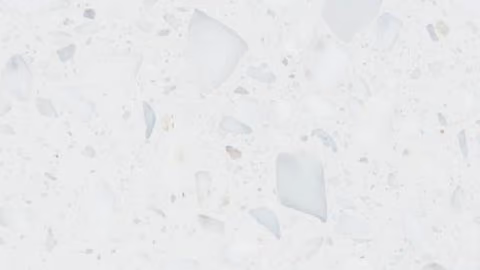




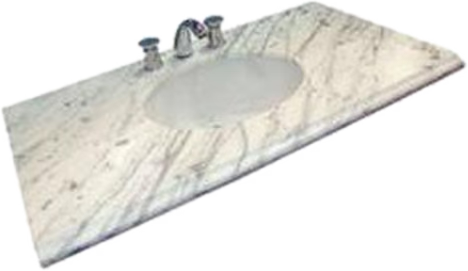


For most worktops, vanity tops and wall panels, 20 mm is the right slab thickness. Use 30 mm for islands and long spans, and 12 mm only for cladding or overlays on a solid backing.
Thickness affects more than the look of the edge. It sets the load on cabinets and floors, the safe overhang, the edge detail and the freight cost.
Thicknesses Datum supplies
Datum does not supply 12 mm slabs. The thinnest option is engineered marble at 15 mm, and the thickest in every material is 30 mm.
- Quartz: 18, 20 and 30 mm, in slabs from 3200 x 1600 mm up to 3500 x 2000 mm.
- Engineered marble: 15, 18, 20 and 30 mm, for walls, floors and feature panels, not kitchen worktops.
- Natural stone: 18, 20 and 30 mm as standard, as full slabs or cut to size.
- Terrazzo: tiles 20 mm thick, with other thicknesses to order.
Thin slabs: where 12 mm works and where it stops
Slabs of around 12 mm are made for surfaces that never carry a load on their own. Typical uses are wall cladding, shower walls, splashbacks, furniture tops, cabinet doors and overlays on an existing worktop.
A thin slab takes its strength from what sits behind it. It works when it is bonded to a flat, rigid backing across its whole area.
The limits follow from that. Overhangs must stay very short, cut-outs near an edge are fragile, and the slab can crack if it is lifted flat.
A square 12 mm edge also looks slight on a worktop. A heavier look needs a built-up edge, covered below.
For thin wall cladding, the closest Datum option is engineered marble at 15 mm. A feature wall in Nero Oro at that thickness keeps the load on the wall down, in slabs up to 3200 mm long.
20 mm: the common worktop and wall thickness
A 20 mm slab is the everyday choice for kitchen worktops, vanity tops, wall cladding and floors. It spans standard base cabinets with normal support, and its weight suits most kitchens and bathrooms.
On walls, 20 mm gives large panels enough body to handle and fix. A vein-matched wall in Calacatta Infinito at 18 or 20 mm lets its long veins carry across the joints.
18 mm sits close to 20 mm and saves about 5 kg/m² in quartz. It suits walls and vanity tops well. For a kitchen worktop, agree it with your fabricator first.
30 mm: islands and self-supporting spans
Stiffness grows with the cube of thickness, so 30 mm flexes far less than 20 mm over the same span. That makes 30 mm the usual choice for islands with seating overhangs, breakfast bars and tops that bridge a gap.
Typical spans include a desk between two pedestals or a vanity top running wall to wall. The thicker edge also reads heavier without any build-up.
An island in Statuario Grande at 30 mm shows its wide veins on a top seen whole from every side. The extra weight is the trade-off, set out in the table below.
Granite at 30 mm suits outdoor kitchens and bar tops, where quartz cannot go because it is not UV stable. Steel Grey is one granite to consider for that use.
Mitred and laminated edges: a 40 mm look from 20 mm
A mitred edge joins a strip of the same slab to the front of the top, both cut at 45 degrees. The joint sits on the corner, so the edge reads as solid stone 40 mm, 60 mm or deeper.
The strip is cut from the slab beside the top, so the veins continue round the corner. Calacatta Oro has enough vein movement to carry a waterfall end mitred to the top.
A laminated edge glues a strip flat under the front edge to double its depth. It is simpler to make, but a glue line shows on the face of the edge.
Either way, the build-up sits only at the edge. The top keeps the weight of 20 mm across its area. It also keeps the stiffness of 20 mm, so support it as a 20 mm top.
Edge strips and waterfall ends come out of the same slabs, so they change the cutting plan. Ask the fabricator for a layout before ordering. Cut-to-size options are on the made-to-measure page.
Weight per square metre by thickness
Quartz weighs about 2.4 t/m³. Natural marble and granite are typically 2.6 to 2.8 t/m³, so they weigh a little more at the same thickness.
| Thickness | Datum supplies it in | Typical uses | Quartz at 2.4 t/m³ | Marble or granite at 2.6 to 2.8 t/m³ |
|---|---|---|---|---|
| 12 mm | Not supplied | Wall cladding, furniture, overlays | about 29 kg/m² | about 31 to 34 kg/m² |
| 15 mm | Engineered marble | Wall cladding, feature panels | about 36 kg/m² | about 39 to 42 kg/m² |
| 18 mm | Quartz, engineered marble, natural stone | Walls, vanity tops, indoor floors | about 43 kg/m² | about 47 to 50 kg/m² |
| 20 mm | Quartz, engineered marble, natural stone, terrazzo tiles | Worktops, vanity tops, walls, floors | about 48 kg/m² | about 52 to 56 kg/m² |
| 30 mm | Quartz, engineered marble, natural stone | Islands, spans, seating overhangs | about 72 kg/m² | about 78 to 84 kg/m² |
The figures are approximate and leave out adhesive, bedding and packing. Weights for engineered marble and terrazzo depend on the mix, so ask for them with your quote.
A full 3200 x 1600 mm quartz slab weighs about 250 kg at 20 mm. At 30 mm the same slab is about 370 kg, and a 3500 x 2000 mm slab about 500 kg.
Overhangs and support
This is general guidance only. Limits differ by material and product, so confirm every overhang, span and cut-out with the fabricator before cutting.
As a rule of thumb, an unsupported overhang is typically kept to about 150 to 200 mm at 20 mm. At 30 mm, the usual guide is about 250 to 300 mm. Thin slabs need support right to the edge.
Beyond those figures, concealed steel brackets, corbels, legs or a steel frame carry the top. Another rule of thumb: at least two thirds of the top’s depth should sit on the cabinets.
Stone does not bend to meet an uneven cabinet. Level the carcasses first, so the top bears evenly and cannot rock.
Gaps over dishwashers and wide sink units need a support rail or batten. Cut-outs weaken a slab locally, so support the top close to every sink and hob.
A floating vanity top needs brackets or a frame. Fix them into masonry or a framed wall built to take the load.
Cabinet and floor loading
Take an island top of 2800 x 1000 mm in quartz. At 20 mm it weighs about 135 kg, and at 30 mm about 200 kg.
Two waterfall ends of 900 x 1000 mm add about 85 kg at 20 mm, or 130 kg at 30 mm. That load rests on the island carcass and the floor beneath it.
Fix island units to the floor, and check that each adjustable leg is in firm contact. Ends that stand on the floor carry their own weight there, not through the cabinets.
Floors carry the stone plus its bed of adhesive or mortar. Upper floors, timber floors and roof terraces need a check by a structural engineer.
Timber floors must also be stiff, because stone and terrazzo crack when the floor beneath them flexes.
Thickness changes floor levels too. Terrazzo tiles such as Grigio Veneto are 20 mm thick, and their bed adds more, so plan thresholds early.
On walls, heavier panels need a backing and fixing method set by the installer or engineer. Large or high panels often combine adhesive with mechanical restraints.
Cost and transport
A thicker slab uses more material, so it costs more to make, lift and ship. Mitred edges need extra strips and cutting time, but add little weight to the top.
Sea freight runs out of weight before it runs out of space. A 20 ft box takes about the same weight as a 40 ft box for less, so stone ships in 20 ft boxes.
At 30 mm, each container holds fewer square metres than at 20 mm. The freight cost per square metre rises with it.
Full slabs need lifting gear on arrival. Check access routes, lifts and stairs before choosing large 30 mm pieces.
Every Datum quote states the Incoterm and named place. Datum sends photos of the actual slabs and packed crates before balance payment and loading. Terms are set out on the shipping page.
Choosing a thickness by project
- Kitchen run on standard cabinets: 20 mm, or 18 mm if the fabricator agrees.
- Island with seating: 30 mm, or 20 mm with a mitred edge and brackets under the overhang.
- Vanity top: 20 mm, or 30 mm for a top spanning wall to wall.
- Wall cladding and feature walls: 15 to 20 mm, depending on panel size and fixing.
- Indoor floors: 20 mm terrazzo tiles, or 18 to 20 mm stone, quartz or engineered marble.
- Outdoor paving: terrazzo or natural stone only, at the thickness the paving design calls for. Quartz and engineered marble stay indoors.
Finish matters as much as thickness on floors and outdoors. The guide to honed, polished and leathered finishes covers grip and care.
Next step
Order samples to judge edge depth and finish in your hand. Browse sizes and colours in the catalogue. For a written quote, email drawings with thicknesses and edge details to contact@datumsurfaces.com.