











Engineered quartz is the practical choice for most kitchen islands: it resists stains, and food acids do not etch it. Marble suits buyers who want natural, one-off veining and accept that the surface will mark and change with use.
The difference comes down to chemistry. Quartz is held together by resin, which lemon juice cannot harm but heat and sunlight can. Marble is calcite, which copes better with heat but reacts with acid.
This guide compares the two on the points that matter for an island: stains, heat, scratches, veining, slab size and care.
What each material is
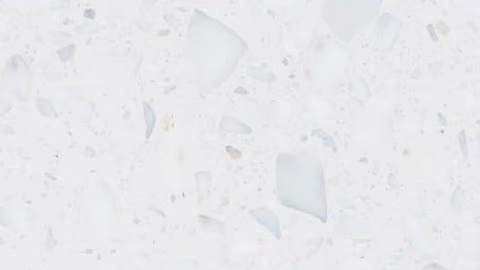
Engineered quartz is crushed natural quartz bound with a resin binder and pigments, then pressed into slabs. The pattern is designed, so slabs from one production batch match closely. The quartz range covers veined designs as well as near-solid colours.
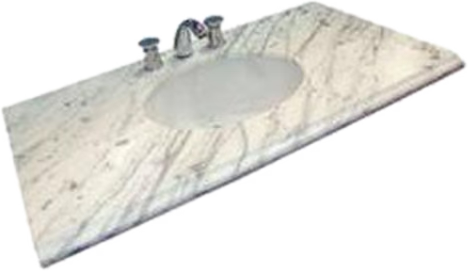
Natural marble is a metamorphic rock, formed when limestone recrystallises under heat and pressure. It is mostly calcite, and its veins come from other minerals present as it formed. No two slabs are the same.
Two materials with similar names are not covered here. Quartzite is a natural stone. Engineered marble is crushed marble bound with resin, made for walls, floors and feature panels rather than worktops.
Stains and etching
Staining and etching are different problems. A stain is a liquid such as oil, wine or coffee soaking in and leaving a darker mark. An etch is acid dissolving the surface, leaving a dull, slightly paler patch.
Marble suffers from both. Lemon juice, vinegar, wine, tomato and acidic cleaners can etch it within minutes. Etch marks show most on a polished finish and least on a honed one.
An impregnating sealer slows the absorption of liquids into marble, which gives you time to wipe up spills. It does nothing against etching, because acid attacks the stone itself. How often to reseal depends on the stone and the sealer.
A simple test tells you when it is due. Put a few drops of water on the surface: if the stone darkens within minutes, reseal.
Quartz needs no sealing. The resin makes it effectively non-porous, and food acids do not etch it. Strong solvents and highly alkaline products, such as oven cleaner, can still damage the resin.
Heat
Neither material should take a hot pan straight from the hob or oven. Use trivets with both.
With quartz, the weak point is the resin. Direct heat can scorch or discolour it, and a sudden hot spot can crack a slab through thermal shock.
Marble has no resin binder, so it copes better with heat. A very hot pan can still mark the finish or the sealer, and sudden local heat can crack any stone.
If the island holds a hob or sink, cut-outs need rounded inside corners to reduce the risk of cracks. Follow the hob maker’s guidance on clearances.
Scratches and chips
Engineered quartz is typically rated 6 to 7 on the Mohs hardness scale. Everyday utensils rarely mark it, though grit and stone objects can. A chopping board protects both the surface and your knives.
Marble is mostly calcite, the reference mineral for 3 on the same scale. Knives, pan bases and grit trapped under a plate can all scratch it. Fine scratches blend into honed marble but stand out on polished.
Both materials can chip at an exposed edge, which matters on an island with stools. An eased or rounded edge resists chipping better than a sharp square one.
Repairs differ. A stone restorer can hone and repolish marble in place to remove etches and scratches. Quartz chips can be filled with colour-matched resin, but a worn polish is hard to restore on site.
Look and veining
Marble veins belong to the stone, so they carry on through edges and mitres. Every slab differs, so Datum sends photos of the actual slabs for your approval. The guide to FOB, CIF, DAP or DDP for a stone order covers that step.
Book-matching is possible with marble. Two consecutive slabs from one block are opened like a book, so the veins mirror across the joint. It suits a wide island that needs a joint, or a pair of feature end panels.
Natural Calacatta and Statuario carry bold veins on a white ground, which suit this treatment. Bianco Carrara has fine grey veining on a white to pale grey ground.
Quartz gives consistency instead. Its veins are designed, so the pattern repeats from slab to slab and the island matches the perimeter worktops.
Calacatta Oro has warm gold veins running diagonally, with enough movement to carry a waterfall end. Statuario Grande gives a bold Statuario look on a surface that food acids do not etch.
On some veined quartz, the pattern does not run through the full thickness. Check the edge of a sample before choosing a mitred waterfall end.
Quartz comes polished as standard, with honed and leathered finishes on request. On a marble island, a honed finish hides etch marks better than a polished one.
Slab sizes for islands and waterfall ends
Island size decides how many slabs you need and where the joints fall. Datum quartz slabs measure 3200 x 1600, 3200 x 1800, 3200 x 1850 or 3500 x 2000 mm. Thicknesses are 18, 20 and 30 mm.
Allow for trimming, because the usable area of a slab is smaller than its nominal size. The 3500 x 2000 mm slab lets a long or deep island top come from one piece.
A waterfall end needs more material. For the veins to run unbroken over both ends, the top and both ends are usually cut in a line from one slab. With ends about 900 mm high, a 3200 mm slab leaves roughly 1400 mm for the top, before trimming.
Longer islands take a second slab for the ends. With quartz, order every slab for the job together so they come from one batch. With marble, use consecutive slabs from one block and lay them out before cutting.
Marble slab sizes depend on the block, so usable sizes are confirmed slab by slab from photos and measurements. Natural stone comes in 18, 20 and 30 mm as standard, as full slabs or cut to size.
Weight matters for the cabinets and the floor. A 20 mm quartz slab weighs about 48 kg/m², and a full 3200 x 1600 x 20 mm slab about 250 kg. Marble is typically 2.6 to 2.8 t/m³, or about 52 to 56 kg/m² at 20 mm.
Seating overhangs need hidden supports beyond a length your fabricator sets for the thickness chosen. A 30 mm top is stiffer than a 20 mm one, but heavier.
Cutting quartz releases crystalline silica dust. Fabricators must cut it wet and use dust control.
Outdoor kitchens and strong sunlight
Quartz is not for outdoor use. Its resin is not UV stable, so sunlight can fade or yellow it over time. Indoors, an island in long hours of direct sun behind large glazing is worth discussing before you order.
Marble has no resin binder to fade, but weather wears it down. Acid rain etches and dulls the surface, and frost can damage some marbles in cold climates.
For an outdoor island, look at granite in the natural stone range instead.
Day-to-day care
Quartz care is simple. Wipe it with warm water and a mild detergent, and avoid abrasive pads, strong solvents and oven cleaner. No sealing is needed.
Marble asks for more attention. Use a pH-neutral stone cleaner, wipe up acids and oils quickly, and put coasters under glasses. Reseal when the water test shows it is due.
Over the years, a marble island collects small etches and scratches. Some owners like this patina, while others have a stone restorer hone it back. If an unmarked surface matters to you, choose quartz.
Quartz and marble compared
| Point | Engineered quartz | Natural marble |
|---|---|---|
| Make-up | Crushed quartz with a resin binder | Natural stone, mostly calcite |
| Stains | Resists stains, no sealing needed | Absorbs liquids unless sealed |
| Acid etching | Food acids do not etch it | Etched by lemon, vinegar and wine |
| Heat | Resin can scorch or discolour | Copes better, still use trivets |
| Scratches | Typically Mohs 6 to 7 | Calcite, Mohs 3 |
| Veining | Designed, repeats slab to slab | Unique, can be book-matched |
| Largest slab | 3500 x 2000 mm | Varies by block |
| Weight at 20 mm | About 48 kg/m² | Typically 52 to 56 kg/m² |
| Outdoors | Not suitable, not UV stable | Weathers and dulls |
| Repair | Chips filled with resin | Can be honed and repolished |
When quartz is the right choice
Choose quartz for an island that sees daily cooking, children, or guests who will not wipe up spills. It suits rental homes, serviced apartments and hotel suites, where the surface must look the same for each arrival.
Quartz also suits developers who need matching islands across many units, since one batch gives a consistent pattern. Keep it indoors.
When marble is the right choice
Choose marble if you want a one-off surface with natural veins, or a book-matched waterfall island. It suits cooks who accept etching as part of the look and wipe up spills promptly.
A honed finish helps, because etch marks show less. Some buyers split the job: marble on the island, where it is seen most, and quartz on the perimeter worktops by the hob and sink.
Next step
Order a quartz sample and a marble sample from samples, then try lemon juice and oil on each at home. Browse the range in the catalogue, or email your island drawings to contact@datumsurfaces.com for a written quote.